
Your 20s are normally the time to build a successful career and a life you enjoy the most. Yet most young adults around the world still feel lost, unsure of the direction they want to take.
This is also why many eventually discover that habits beat motivation when it comes to creating lasting change and progress.
This is the most common pattern that you might get yourself into:
- Wake up early in the morning
- Go to work
- Get home, feeling exhausted, as if your heart were empty
- Start scrolling, or watching movies and dramas, to spend your evening
- Go to bed late at night
- Repeat the process
Here’s an interesting fact. Deep down, you’ve always wanted to do and learn things you love in your free time.
The problem is that energy and mood are drained after getting off work. Work is already exhausting enough. What’s the point in making time for working hard to improve yourself?
Fundamentally, it all comes to one factor that causes you to go through the same pattern in life repeatedly: Relying only on motivation to change or take action.
Unfortunately, motivation rarely lasts in the long term.
Instead, habits matter more than motivation itself because they’re presented as a structured system when motivation isn’t there to support you.
In this article, we’ll walk through why motivation keeps fading, why habits work differently, and how small actions can slowly help you create real progress after work.
Why Habits Beat Motivation for Long-Term Self-Improvement
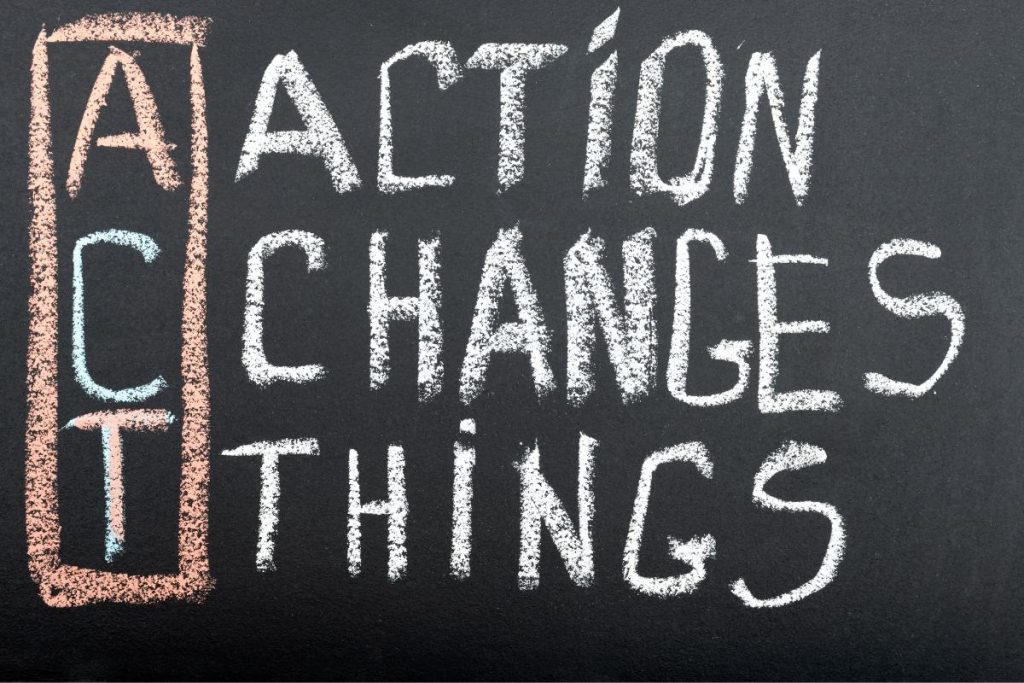
Self-improvement literally means the process of meaningful, consistent learning with progress and becoming a little better over time.
It’s not about feeling inspired and getting what you desire in only one night. That’s exaggerated and fictitious. Unless you’re asleep, then that could definitely come true.
But in reality, the self-growth journey usually takes longer, maybe a few months to years.
Real progress doesn’t go occasionally. It’s slowly built from showing up consistently over time.
Building skills is a great example. This specific action can be time-consuming, but it’s worth the long run. As those skills eventually stay with you for your lifetime. No one can take them from you.
Not only that, you get to build long-lasting discipline, confidence, and clarity about the thing you want to do in life. All of them are indirect, but powerful.
As a young adult in your 20s, small repeated actions are more practical than going out of your way to do everything and feeling motivated at the same time.
Sadly, after going through the intense process, your motivation and energy get consumed all at once. Then, no more turning back, and the story no longer goes on.
Why Motivation Feels Powerful at First but Rarely Last

Motivation often feels exciting at the start, feeling energetic, saying to yourself, ‘Yes, I’m going to do this, and I can definitely be consistent in the process?’
Hate to break it to you, but that’s what I would call a white lie that only lets you start easily but ends abruptly after a few days or weeks.
Motivation often appears when:
- Watching a motivational video on YouTube, with a speaker sharing some powerful, inspirational words with you.
- Reading a book in which you come across some touching stories and powerful quotes.
- Setting a huge, exciting goal.
- Imagining a better future, like becoming a successful entrepreneur or having your own team and company, while sitting alone somewhere.
I don’t mean to say they all are useless. They are, indeed, effective. However, the motivation only gives you an instant, emotional push. It’s not stable.
This is what usually happens: you feel inspired at night or on weekends. You feel like no one can stop you.
But when it comes to executing the task, things start to break apart, and you lose motivation.
That’s exactly how motivation usually fades away. And things like your emotions, mood, stress, energy, and daily responsibilities always influence your feelings.
Again, this doesn’t mean you’re a hopeless or lazy person, not at all. It’s just the over-reliance on motivation that makes you inconsistent and eventually feel like doing nothing in your life.
Nonetheless, motivation is the fuel that gets you started without friction, but it becomes fragile when sustaining the progress over time.
So, what you really need in real life is habits as a reliable system that enables you to show up consistently and stay in the game, even when you don’t feel like it some days.
The Difference Between Habits and Motivation Most People Ignore
Motivation and habits mean different things.
As we all know, motivation is the feeling that gets you started.
Habits are the actions you repeatedly do until they become part of your routine.
Motivation comes and goes as it pleases, depending on your energy, mood, and situations.
Habits let you keep moving even when you don’t feel like doing the task.
That’s the reason progress depends on both.
I’m not saying motivation doesn’t matter; it’s important to produce desire to do something.
Only with habits, you won’t need to feel ready. They’re considered a system that keeps you walking through your self-growth journey.
For instance, reading a whole book can be overwhelming.
Instead, start with 1 to 2 pages, or 5 minutes a day, to build momentum.
Imagine continuing the actions for 365 days; they eventually compound and create meaningful results in the end.
Why You Keep Restarting Your Life Every Monday
You may be familiar with this cycle:
- Feel motivated, wanting to learn a skill, maybe video editing.
- Begin with strong motivation, and do the task every day.
- Feel tired, and the mood goes off, so you give up.
- Feel guilty, saying that ‘it could’ve lasted.’
- Feel motivated another day, and restart the whole process.
This sounds like the grind you’re going through, right?
In fact, this is the habit loop called “cue, craving, response, reward” that you’re stuck in.
If you’re wondering why this always happens, the reason is simple: you only do what you plan when in the mood. That’s when the problem shows up.
You keep telling yourself, ‘It’s okay; I will start again on Monday,’ every time you can’t keep up with the streak and it’s broken.
It does feel good to be in this endless cycle, comforting yourself by saying ‘I will definitely be consistent next time’ when things can’t go further. But the root problem remains.
Feeling tired of always procrastinating? Here are 7 ways to overcome procrastination and start making progress.
When that day when you feel low comes, you lie in bed with your phone.
It may seem extremely difficult to get this problem off of you, but it’s actually not.
What you truly need is an organized system, even if it’s small, to get through the golden time, which is the weekday evening when you get off work.
Four to five hours may seem short or like nothing, but they add up faster than you think. You’ll have learned and done a lot of things that contribute to your future.
Why Small Habits Work Better for Tired Working Adults
Big goals always sound super appealing and inspiring. Like:
- Becoming a millionaire
- Escaping the 9-to-6 grind
- Traveling solo around the world
- Losing weight and becoming fit
- Becoming a famous YouTuber or internet celebrity
But we always have to face the reality, admitting that a tremendous goal needs great effort and time.
They sound heavy and overwhelming, especially after going through a long workday when you feel mentally and physically exhausted.
You can avoid this trap by adopting small habits. Why? It’s because they’re easier to start with; there’s just a minimum time you can accept, repeat, and maintain the progress.
It sounds like a cakewalk, but the habit must be effortless to start so it fits your current energy level without you feeling drained.
- 10 to 20 push-ups
- 1 to 2 pages of reading
- 5 minutes of language learning
- 5 to 10 minutes of learning a skill you’re interested in.
These activities seem small but are not useless at all.
You won’t realize the difference at first, but the results become clearer over time as time goes by. So be patient!
This is exactly how you build momentum and a streak that keeps running, without feeling burned out in the end.
When you look back at your records, trust me, you’ll feel super proud of yourself, saying, ‘I’m glad I didn’t give up.’
Why Consistency Beats Motivation in Real Life
Motivation keeps you on a smooth path without friction when life is calm and composed.
But the truth is, real life has always been messy. We can’t expect it to go in a straight line, without interruption. That’s impossible.
You’ll experience different scenarios, like the following:
- Huge work pressure
- Tiring evenings
- Distractions that come off all over the place
- Low or bad mood, where you feel like doing nothing.
- Unexpected events or plans
To be frank, they can be a wet blanket for everyone. Because when the challenges come, motivation is always the first thing to disappear.
Thus, consistency helps a lot, as it’s a system that doesn’t rely on your excitement every day.
You still show up and do it, even if some days are not in your favor. That habit has become a must-do on your list.
Being consistent, even though the repeated actions are small enough and maybe come with flaws. But that’s totally fine. because you’re not looking for a perfect daily performance.
That can hold you back, especially when you want to do a lot at the same time and eventually throw in the towel somewhere along the way.
And missing one day doesn’t mean the end of the world. You can still come back stronger and continue with the habit. Life still goes on, and that’s your experience.
The first book I read was ‘Atomic Habits,’ and I fell in love with reading from that time. I spend 10 to 15 minutes a day reading a few pages, even though my mind tells me to stop.
Looking back on my progress, I’ve read 11 self-help books in 1 year, and I’m super proud of the achievement.
For me, the biggest reward wasn’t about finishing reading the books.
Instead, it meant I could stay consistent with a habit.
You start to build self-confidence and feel less stuck when you continue to show up.
Ultimately, motivation is useful for getting your foot in the journey. But consistency maintains and keeps it alive.
How to Build Better Habits When You’re Mentally Tired
As a human living on this planet, it’s normal to feel mentally exhausted sometimes.
And it can be particularly tough to keep up with our progress to have everything done in a short time.
Truth be told, that’s impossible in real life.
Your energy is low, and you feel tired after a long workday.
Hence, your habits should fit your energy level, not against it.
Instead of doing everything at once, start small and do it consistently.
It’s easier to achieve small wins, and repetition creates progress.
Ask yourself, ‘What’s the small action I can take in the evening after work?’
It could be:
- Reading 1 page of a book
- Learning for 5 minutes
- Writing 1 to 2 paragraphs
- Spending 5 minutes on your side projects.
You don’t do it to impress people. Your goal is to show up. It’s that simple.
Discover some other effective ways to build good habits in your 20s, when you feel lost. This guidance will help you.
The habits you do after work and on weekends should be manageable. Doing the things that you truly enjoy makes the habit easier to maintain.
Think of your main goal and the situation in which you really succeed and why you got started.
That lets you keep walking on your journey, even when things are tough.
Why Habits Keep Working Even When You Don’t Feel Motivated
Progress becomes more sustainable when you concentrate on habits, rather than literally waiting for pure excitement.
Your brain normally won’t get used to a new task that you’ve never done before at first, because it’s unfamiliar.
When you repeat it until you get the hang of it, it can be done without much thinking; it turns into progress.
This is especially useful for you who feel like you’re struggling with your current life.
You just don’t have that inspiration that encourages your action, particularly after work.
Habits come to the rescue by reducing or eliminating the need to argue with yourself daily.
It means you don’t have to deal with your mind anymore, which is full of doubts and questions about your life.
No more self-doubts like the following:
- Am I not good enough?
- Am I going to live like this forever?
- What did I do wrong?
This is why small habits are powerful, because they aren’t as intimidating as a direct, huge action that requires great effort.
The outcomes? They help you:
- Build particular skills that will be useful in the future
- Find the right direction of life that you want to head towards
- Make progress in your free time, even if it’s small, without constant praise
It doesn’t stop you at a specific point, where you feel tired and moody.
This is what makes small habits stronger, even though you can’t see results in the first place.
Motivation is overrated in real life.
What matters is the specific action you take, no matter how tough it is.
Why Discipline Feels Hard Without Simple Daily Habits
If you ask me, building discipline is one of the hardest tasks for young adults in their 20s.
This has to do with overly depending on willpower when it comes to taking action.
I’m not saying willpower is bad, but it becomes a problem when you use it for everything.
But simple habits are otherwise different. They flow naturally and smoothly.
Discipline will never be a challenging task that you want to avoid.
Think of it as something you’d want to do every day, even if you’re busy.
- Brushing your teeth
- Taking a shower
- Having your breakfast and dinner
Similarly, make those habits you’ve been avoiding part of your daily routine, and get used to them.
Remember that discipline is not meant to punish you, as if your school teacher scolded you when you answered a question wrong.
Instead, it’s a complete structure that supports you along the way, letting you become who you want to be since you grew up.
You don’t need to change into a whole new person with a different identity that makes you unique overnight.
Do it one at a time instead of pushing yourself to the limit at a time.
You’ll find out how long you can go.
How Small After-Work Habits Can Slowly Change Your Future
We’ve always had a dream as little children.
We still have hopes, wanting to turn possibility into reality.
You’re not the exception.
After work is the golden time and a space for self-growth. Use it to your advantage, and you’ll thank yourself later.
That time works for different activities.
- Learning and building new skills
- Reading a book
- Exploring interests and hobbies that can be a cash generator in the future
- Exploring your career paths
Never underestimate the power of this short time that goes by in the blink of an eye.
It can create greater opportunities that weren’t there before.
Yes, we must admit that change doesn’t take place quickly.
It goes slowly, without having dramatic scenes.
But this evening can set you apart by taking you towards a path you’ve always aimed for, if you use it correctly.
How Small Habits Slowly Break the Work–Sleep–Repeat Cycle
Most young adults find themselves trapped in a repetitive life, and nothing has changed overnight.
And everyone, including you and me, is thinking of breaking through it.
The fact is that change is often quiet and invisible in the beginning.
It’s not blinking, and it appears magically. It doesn’t work like that.
Reading a few pages in one evening won’t directly transform your life.
Doing one workout won’t instantly get you in shape.
Spending one hour learning a skill won’t turn you into an expert.
Yet, those small efforts you make pile up quietly in the background.
Eventually, small habits let you stay on track and gain control of your life that you’ve always wanted to pursue.
One day, you’ll realize you no longer stay in the same place where you started.
Motivation Comes and Goes, but Habits Keep You Moving Forward
Ultimately, motivation is temporary, while habits are repeated actions that let you keep moving, no matter what situation you’re in.
It doesn’t mean you’re nothing, or it’s an apocalypse, when you can’t see a bright light ahead of you and feel stuck without a proper direction.
You can definitely break through the work-sleep-repeat cycle if you use the right method.
It’s just a matter of time before you get to the destination you want to be at. And every small action you take moves you one step closer.
Start today with a tiny habit. You don’t have to try to fix everything in a day.
Let the results come naturally. You just have to keep going!

[…] https://selfgrowlab.com/why-habits-beat-motivation-in-a-work-sleep-repeat-routine/When you get home from work, you may not feel physically tired. You’re still energetic. But you’re mentally drained after 8 hours, and your mind whispers, “You’ve earned rest. Relax.” […]
[…] Here’s why habits always beat motivation. […]