
7 ways to Overcome Procrastination
and Finally Get Things Done
Table of Content
- Why Procrastination Happens (and Why It’s Not Just Laziness)
- Understand What’s Really Causing Your Procrastination
- Break Big Tasks Into Smaller Steps That Feel Easier to Start
- Use the 5-Minute Rule to Trick Yourself Into Taking Action
- Remove Distractions That Quietly Destroy Your Focus
- Set Clear Deadlines to Create Urgency and Momentum
- Reward Yourself After Progress to Build Motivation
- Build a Simple Daily Routine That Makes Procrastination Harder
- How to Stop Procrastinating When You Feel Lazy or Unmotivated
- Small Actions Today Can Break the Procrastination Cycle for Good
Why Procrastination Happens (and Why It’s Not Just Laziness)

Looking for effective ways to overcome procrastination, but don’t know how to start?
Have you ever had significant tasks you wanted to complete, but it took forever?
Ever felt a task was so daunting that you just kept dragging?
That is super frustrating, right? You know something has to be done now, but you just don’t have that desire to act.
In fact, there’s procrastination for the world with humans. It’s common because people tend to avoid hard things and lean towards instant pleasure. That’s the fundamental of human nature.
So, be sure not to blame yourself for struggling to stay determined and consistent. It has nothing to do with our discipline.
In turn, emotions take charge of the brain, restraining us from doing difficult things as soon as it senses potential danger.
Thus, being aware and reflecting on the actual causes of procrastination is the first vital step to change.
In this article, I’ll walk you through 7 ways to overcome procrastination, helping you stop delays for work, study, or things you want to do.
Understand What’s Really Causing Your Procrastination

First things first, every action or circumstance that arises must have a hidden trigger that plays along behind it. So it’s procrastination.
Therefore, one of the ways to overcome procrastination is to identify drivers that sneak past without you even knowing.
These are common triggers that most individuals must have been facing on their own, such as
- Fear of failure and judgement
- Waiting for the perfect timing to start
- Feeling overwhelmed and frightened over huge goals with tight deadlines.
- Continuous uncertainty holds them back
- Feeling stressed and mentally overloaded
Let’s imagine a situation in which you wanted to write a book. You told yourself you would start today. But then you hadn’t even done anything. You said, ‘It’s okay, I will definitely start tomorrow. Again, no action was taken.
That way, we should ask ourselves, ‘Why am I like that, being all talk and no action? Could it be that the process will be time-consuming and will take a lot of work, or will it be such a waste of time if there aren’t quick results?’
Hence, rather than judging yourself for taking on all the responsibilities and assuming it’s your fault for procrastinating, you should monitor your daily actions and patterns.
By doing so, you’ll be able to identify the main cause and figure out solutions to the problem.
As we mentioned before, we must be crystal clear about the reason before making actionable plans.
Break Big Tasks Into Smaller Steps That Feel Easier to Start

Here’s an interesting fact: our brains always resist complicated and extreme goals that are hard to achieve.
Meanwhile, our brains don’t favor unclear objectives because they have no idea where they’d take us. So, our mind would signal us not to participate.
That’s the main reason we dislike mountain-like, challenging duties. Our brains detect risks and immediately activate the runaway button because of uncertain outcomes.
For that reason, the way to overcome procrastination is to break enormous tasks into manageable chunks.
As you do that, you’ll feel it’s much easier to commence without excuses. The brain prefers lightweight tasks, and you sneak through its alert system by making the work look like a cakewalk.
As we all understand, the hardest thing we face is not executing but starting. Indeed, that’s the first point of a journey that most individuals aren’t capable of reaching.
Instead of thoroughly thinking far ahead, like what the process and results will look like, or how much time you will spend finishing the project, start first.
Start with small steps that aren’t overwhelming and give it a try. Believe it or not, the momentum automatically steps in, and you feel like doing more when undertaking a particular task.
Let’s say you’ve always dreamed of becoming a blogger who earns a lucrative amount of income. What’s next?
It’s simple. What you need to do is start right away. Don’t think of how grueling the process will be. Start writing, and a bunch of ideas will flow naturally after.
Once you do that, you’ll realize that you actually get intimidated by your imagination; it’s actually as easy as you could imagine.
Use the 5-Minute Rule to Trick Yourself Into Taking Action
It’s easy to rely entirely on motivation, but staying consistent is difficult.
However, motivation can fluctuate in the heat of the moment, depending on our emotions. Eventually, waiting for motivation delays the progress we want to make.
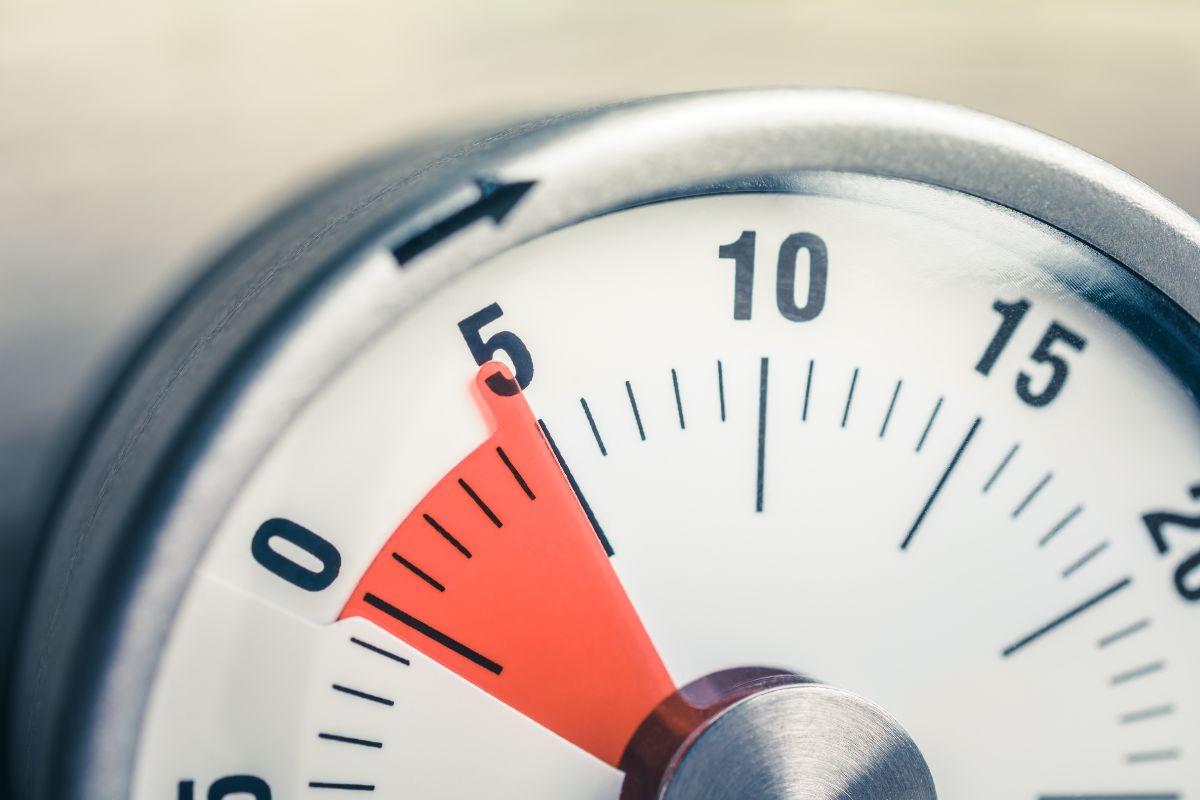
That’s when an effective trick comes into play to overcome procrastination: the 5-minute rule!
The 5-minute rule is considered an entry point that naturally shapes both motivation and consistency.
5 minutes pass in the blink of an eye. So, it simplifies the work, making it effortless. It means you can basically do everything in a short time without feeling mentally burdened.
- Want to read a book, but the content is too long? Read for 5 minutes first.
- Aiming to lose weight and get in shape, but it seems exhausting. Jog for only 5 minutes first.
- Tired of your current job and want to change careers? Spend 5 minutes looking for companies you’re interested in.
After we are comfortable executing the work, we can gradually adjust the time we spend on a task. Little by little, and that’s what achievable, positive progress looks like.
Ultimately, long-term engagement begins with small actions that may not seem impactful at first but gradually generate meaningful results over time.
Remove Distractions That Quietly Destroy Your Focus to Overcome Procrastination

Nowadays, humans live in a world full of distractions. Unfortunately, they are inevitable.
- The electronic devices we use, such as smartphones, smart TVs, and laptops.
- Non-stop entertainment sources, like social media, mobile games, short videos, and streaming apps.
- Instant messages, notifications, and emails
Those are the interruptions that cause people to lose concentration and develop a short attention span over time.
They hinder our ability to produce quality work and maintain inner peace due to incessant distractions.
To overcome procrastination, it’s crucial to remove all distractions from our surroundings, rather than relying on willpower. Willpower won’t last long and may slowly fade away.
For instance, you’re a freelancer currently working on an article. To ensure deep work, place your phone in places where you can’t reach. If that’s impossible, at least silence or turn off the phone for a certain period to avoid interruptions.
In fact, that’s the habit I’ve developed, and it’s been very effective whenever I am writing my blog.
In effect, your focus is significantly enhanced without those frictions. You make room for quality work and manage to finish important tasks on time.
Protect your attention now by eliminating distractions, rather than rebuilding it later, because rebuilding focus is much harder.
Set Clear Deadlines to Create Urgency and Momentum

Most of the time, people are more likely to delay tasks without fixed deadlines. Without a sense of urgency, they think it’s fine to leave them afterwards.
The truth is, tasks sometimes remain untouched, and it causes panic when the work is truly vital and nearly due.
However, a clear deadline forces people to commit to duties, treating them as must-do responsibilities. Consequently, it creates dissatisfaction with not finishing the task earlier.
We’ll feel like failing a mission in a game, and that’s exactly what we’re looking for: a sense of accomplishment.
Urgency creates progress. Setting a deadline for each task ensures you meet the due date and complete it within a clear timeframe.
If you want to be productive and overcome procrastination, set up a schedule with preset timelines for tasks and celebrate small wins of goals.
One reason people procrastinate is that they focus on many goals at once. In fact, a person can’t be good at everything. Instead, ask yourself which objective you should prioritize first, then set a cutoff and stick to it.
Thus, a clear and defined structure helps you build consistent actions that last longer.
Reward Yourself After Progress to Build Motivation

Rewards are the things that we can’t ignore after fulfilling objectives. Technically, our brains favor immediate recognition and achievements to keep us going.
Look back to the days when you were a child. You aced a mathematics test, and your parents rewarded you with a gaming device, like a PS2. Then, strong motivation came, and piqued your interest in doing better.
The same concept applies to overcoming procrastination. When someone acknowledges the effort and time you invested in something, it makes you feel satisfied and confident, as your hard work pays off, encouraging you to keep moving forward.
Because of that, motivation encourages repeated behavior, helping you show up and do the work continuously, even when you feel bored and tired.
Let’s celebrate small wins every time you complete a task. It doesn’t matter whether it’s treating yourself to snacks and drinks, watching a movie at the cinema, or enjoying a steak at a luxurious restaurant; they still count and create a sense of inner satisfaction.
However, one thing to keep in mind is that consistency is doing things at your comfortable time and pace without putting pressure on yourself. Enjoy the process and remember to reward yourself for every small win ahead.
Build a Simple Daily Routine To Make Procrastination Harder

Here’s the thing. A routine forms when you do something naturally every day without overthinking, so it becomes part of your life. Your brain doesn’t have to think about whether that specific action is worth your time and energy. You’ll literally do it without hesitation.
When it comes to routine, a predictable schedule has a critical role. In fact, it helps your brain lock it in and encourages you to follow every activity listed, because you already know which one to do at a specific time.
The truth is, you build good habits through consistency. Indeed, they go hand in hand because you develop a habit when an action becomes part of your daily routine, which is something you do automatically.
Take time to create a personal schedule with a structure that works at your pace. Then, monitor your progress and adjust the schedule as you go. That’s how small improvements take place.
As a result, you’re free from emotional control, and you don’t have to rely on motivation that comes and goes unpredictably to overcome procrastination. It means no more procrastination, but stable actions that speak for themselves.
How to Stop Procrastinating When You Feel Lazy or Unmotivated

Most of the time, we mistake mental fatigue for laziness, and that’s not true. In point of fact, these 2 terms are not the same.
You may have experienced moments in your life when you didn’t feel like doing anything all day, as if life lacked purpose. The reality is that the feeling is temporary. As we mentioned earlier, emotional fluctuations work behind the scenes, and they will pass.
It has nothing to do with your personal identity, and it doesn’t mean you’re a lazy person who will stay that way for the rest of your life. These are just temporary moments of mental fatigue and low energy.
It’s okay to set lower expectations and not force yourself to complete everything on your schedule when you’re feeling low. Instead of spending a long time on a task, try reducing it to a minimum so you don’t feel overwhelmed.
Sometimes, simply doing nothing and spacing out can be a more effective way to relax and recharge your energy than scrolling through social media or watching Netflix or YouTube to pass the time.
Most people always wait for themselves to feel ready. But we have to face the music that we won’t feel ready all the time, because different thoughts and feelings take the reins.
Stop waiting forever, and start right away, even though it’s imperfect. Getting things done is always better than doing them perfectly. You can always come back to your work to refine it, so there’s no rush in idealizing everything in a day.
Actions are the fuel that keeps motivation strong over time, so use them to keep moving forward even when motivation feels low.
Small Actions Today Can Break the Procrastination Cycle for Good

In conclusion, by adopting the 7 steps to overcome procrastination discussed above, you’ll gradually become a disciplined individual who does your best to get things done.
Always keep in mind that progress is more important than perfection. There will always be ups and downs. Imagine cups filled with water. Sometimes they are full, and sometimes only partly filled. But even then, progress continues moving forward step by step.
On the other hand, starting can be difficult and nerve-wracking, but things will go smoothly once you step out of your comfort zone and take the first step. That’s the exact moment you build consistency and focus on 1% improvements that shape behaviors that stick with you for a long time.
Hesitate no more, procrastinate no more, take one small action today that you’ve thought of, and be ready to see the fruitful paths ahead!


[…] If you find yourself procrastinating most of the time, then this article may be a helpful guide for you: How to stop procrastinating and get things done. […]
[…] tired of always procrastinating? Here are 7 ways to overcome procrastination and start making […]